Ants Web Design Agency Logo
  • Home
  • Web & Systems
    • Custom Website Development
    • WordPress Development
    • Shopify Development
    • eCommerce Development
    • Custom Software Development
  • Branding
    • Brand Strategy
    • Brand Development
    • Brand Refresh
  • Marketing
    • Pay Per Click
    • Search Engine Optimization
    • Social Media Advertising
    • Conversion Rate Optimization
  • Cybersecurity
  • Printing Hub
  • Learning Hub
  • About
  • Showcase
Get in Touch
Ants Web Design Agency Logo
  • Home
  • Web & Systems
    • Custom Website Development
    • WordPress Development
    • Shopify Development
    • eCommerce Development
    • Custom Software Development
  • Branding
    • Brand Strategy
    • Brand Development
    • Brand Refresh
  • Marketing
    • Pay Per Click
    • Search Engine Optimization
    • Social Media Advertising
    • Conversion Rate Optimization
  • Cybersecurity
  • Printing Hub
  • Learning Hub
  • About
  • Showcase
Get in Touch
Ants Web Design Agency Logo
  • Home
  • Web & Systems
    • Custom Website Development
    • WordPress Development
    • Shopify Development
    • eCommerce Development
    • Custom Software Development
  • Branding
    • Brand Strategy
    • Brand Development
    • Brand Refresh
  • Marketing
    • Pay Per Click
    • Search Engine Optimization
    • Social Media Advertising
    • Conversion Rate Optimization
  • Cybersecurity
  • Printing Hub
  • Learning Hub
  • About
  • Showcase
  • Home
  • Web & Systems
    • Custom Website Development
    • WordPress Development
    • Shopify Development
    • eCommerce Development
    • Custom Software Development
  • Branding
    • Brand Strategy
    • Brand Development
    • Brand Refresh
  • Marketing
    • Pay Per Click
    • Search Engine Optimization
    • Social Media Advertising
    • Conversion Rate Optimization
  • Cybersecurity
  • Printing Hub
  • Learning Hub
  • About
  • Showcase
Author: Lasitha
HomeArticles Posted by Lasitha
Ants Answer Hub
March 18, 2026by Lasitha

What is an ERP System? – Ants Answer Hub

1. What is an ERP system?

An ERP, or enterprise resource planning system, is a business platform that connects core operations such as purchasing, stock, sales, production, internal approvals, and reporting into one controlled system. Instead of relying on disconnected spreadsheets, emails, and manual registers, the business gains one structured workflow with better visibility and fewer errors.

Company Website Cost in Sri Lanka (2026)

What ERP solves

Businesses usually look for ERP when stock records are unreliable, approvals are slow, reports are difficult to prepare, or departments work in isolation. ERP reduces these problems by creating a shared source of truth for transactions and operational data.

Common ERP modules

Inventory and stock movement

Purchasing and supplier records

GRN and item receiving

Sales orders and invoicing support

Production or job management

Role-based approvals

Dashboards and management reports

Audit visibility and data control

ERP vs accounting software

Accounting software focuses mainly on finance records and compliance. ERP covers operational workflows before finance, such as stock, purchasing, internal issue notes, branch movements, production, and business dashboards. In many companies, ERP and accounting systems either connect or operate alongside each other.

Why phased implementation works best

ERP projects are most successful when they start with a practical MVP. For many businesses, that means inventory, purchasing, GRN, and core reporting first. Once teams become comfortable with the process, sales, production, QA, and finance-related extensions can be added in later phases.

What makes an ERP valuable

Real-time stock visibility

Reduced manual errors

Better accountability through user roles

Faster reporting for management

Cleaner operational history for audits and reviews

A stronger base for future automation

Recommended internal links

ERP solution page

CRM solution page

Inventory or production-focused solution pages

Industry case studies

Contact or requirement discussion page

Suggested conversion block

Planning an ERP for your Sri Lankan business? Share the main pain points in stock, purchasing, sales, production, or reporting. We will help you define an ERP MVP that solves the biggest operational problems first and leaves room for future growth.

FAQs

Can we start with only inventory and purchasing?

Yes. Many successful ERP projects begin with a limited first phase and expand later.

Can ERP support manufacturing?

Yes. ERP can support production jobs, bills of materials, wastage, and quality checkpoints.

Can we track slow movers and stock aging?

Yes. These reports are common reasons businesses invest in ERP.

Do you provide user roles and audit logs?

Yes. Role control and activity visibility are key ERP requirements.

How should staff training be handled?

Training should be role-based and phased so teams adopt the system with less disruption.
Read More
Ants Answer Hub
March 18, 2026by Lasitha

What is a CRM for Sri Lankan Businesses? – Ants Answer Hub

1. What is a CRM and what problems does it solve?

A CRM, or customer relationship management system, is a tool that helps a business organize leads, customer interactions, follow-ups, pipeline stages, and sales activity in one place. For many Sri Lankan SMEs, the real value of a CRM is not just data storage; it is better follow-up discipline, faster response times, clearer ownership, and more visibility for management.

What is a CRM for Sri Lankan Businesses? – Ants Answer Hub
The problem most businesses have before a CRM

Many teams manage inquiries through a mix of WhatsApp, phone calls, spreadsheets, and memory. That leads to missed follow-ups, duplicate conversations, unclear lead ownership, and no reliable view of what the sales pipeline actually looks like.

What a practical CRM should do

Capture and organize leads from multiple channels

Assign leads to the right staff member

Track follow-ups, calls, and notes

Show pipeline stages clearly

Send reminders for pending action

Allow managers to see activity and performance

Support reporting by source, staff member, and status

CRM vs Excel and WhatsApp

Excel and WhatsApp are useful tools, but they are not reliable systems for team-based sales management. A CRM gives structure, accountability, and reporting. It reduces the risk of inquiries being lost when one staff member is unavailable or leaves the company.

When a business should invest in CRM

You receive leads from more than one channel

More than one team member handles sales

Follow-ups are often delayed or forgotten

Management wants better visibility into conversions

You want to connect sales activity with quotations or future invoicing

A smart implementation approach

The best approach is to start simple. Build the first version around lead capture, assignment, follow-up reminders, notes, and dashboards. Once the team is using it consistently, extend it into quotations, customer service, ERP integrations, or WhatsApp automation.

Recommended internal links

CRM solution page

ERP solution page

Lead management or sales process guide

Relevant CRM case studies

Contact or demo request page

Suggested conversion block

Need a practical CRM for your Sri Lankan business? Tell us how leads come in, who follows them up, and what reports your management team needs. We will help you define the right first-phase CRM without overcomplicating the rollout.

FAQs

Can we track leads from calls, WhatsApp, and the website?

Yes. Leads from multiple channels can be captured and organized by source.

Can we assign leads to staff?

Yes. Owners, follow-up dates, notes, and reminders can be set for every lead.

Can management see staff performance?

Yes. Dashboards can show conversion rates, pending follow-ups, and pipeline value.

Can CRM connect to quotations or invoices later?

Yes. CRM can be extended toward quotations, invoices, or ERP workflows in phases.

How long does implementation take?

That depends on scope, but many teams start with a focused MVP and expand later.

Read More
Ants Answer Hub
March 18, 2026by Lasitha

Company Website Cost in Sri Lanka (2026) – Ants Answer Hub

1. How much does a company website cost in Sri Lanka?

A company website cost in Sri Lanka depends mainly on design quality, page count, content readiness, and whether you need advanced features such as blogs, service detail pages, multilingual support, or custom enquiry flows. In the Sri Lankan market, the gap between a basic template site and a high-performing business website is significant, so the best question is not only 'how much does it cost?' but also 'what value am I getting for that cost?'

The short answer

Many publicly listed Sri Lankan website packages start at low entry prices for very simple business sites, while stronger custom corporate builds sit at higher price points because they include better design, stronger content structure, performance work, SEO readiness, and more time for quality assurance. For most serious businesses, the real investment sits in the professional or enterprise range rather than the cheapest starter tier.

What changes the price the most

1. Number of pages and content depth

A five-page website is not the same as a fifteen-page website. More pages mean more layouts, more copy structure, more internal linking, and more testing. Service businesses also benefit from dedicated service detail pages instead of trying to explain everything on one page.

2. Design quality

A lower-cost site usually relies on a generic layout with minimal customization. A premium business website includes custom section planning, clearer call-to-action placement, stronger trust elements, and a layout that feels more aligned with your brand.

3. Features and custom modules

Costs rise when you add quote request workflows, branch pages, career pages, blog modules, portfolios, team profiles, gated resources, multilingual support, CRM links, or custom calculators. The more the website behaves like a business tool rather than a brochure, the more planning and development it requires.

4. Content readiness

If content is already well written, the project moves faster and costs less. If the team has only rough notes, then content structuring, rewriting, and image planning add effort. Content is one of the biggest hidden cost drivers in website projects.

5. SEO readiness and performance

A site that only looks good is not enough. Businesses that want organic visibility usually need clean heading structure, good metadata, internal links, schema markup, mobile-friendly layouts, fast image delivery, and a clear conversion path.

5. SEO readiness and performance

A site that only looks good is not enough. Businesses that want organic visibility usually need clean heading structure, good metadata, internal links, schema markup, mobile-friendly layouts, fast image delivery, and a clear conversion path.

Typical package types in Sri Lanka

Starter website

Best for new or very small businesses that only need a simple online presence. Usually includes a few pages, a contact form, and a basic design structure.

Professional business website

Best for SMEs that want an impressive first impression and steady lead generation. This usually includes a stronger homepage, multiple service pages, portfolio or case study sections, better content hierarchy, and more attention to conversion.

Enterprise or custom corporate website

Best for companies with many services, multiple audiences, several branches, or a need for custom workflows. This level often includes custom page templates, advanced enquiry flows, role-based content management, or later integrations with CRM and ERP tools.

What should be included in a good quotation

Mobile-responsive design across desktop, tablet, and mobile

A strong homepage with clear calls to action

Well-structured service or solution pages

Contact forms, WhatsApp call-to-action, and map details

Basic on-page SEO foundations such as page titles, headings, and sitemap support

Performance basics such as image optimization and clean code

Training or guidance for the admin panel

Post-launch bug-fix support for the initial period

Hidden costs businesses often miss

Domain and hosting renewals

Premium plugins, stock assets, or third-party tools

Additional pages beyond the agreed scope

Extra revision rounds caused by delayed or changing feedback

Ongoing maintenance, backups, and security updates

Professional content writing or translation work

How Ants Creation should position this page

This page should not only answer a pricing question; it should help visitors self-qualify. That means the article should guide readers toward the right package level, explain why cheaper is not always better, and move them naturally toward an enquiry. Adding a short package comparison and a clear quotation call-to-action makes the article more commercial without making it feel pushy.

Recommended internal links

Website Packages or Web Design Sri Lanka service page

WordPress vs Laravel comparison page

How long does it take to build a website in Sri Lanka?

Website maintenance guide

Relevant case studies or portfolio pages

Contact or Request a Quotation page

Suggested conversion block

Looking for a professional business website in Sri Lanka? Tell us your goals, required pages, preferred style, and target launch timeline. Our team will recommend the right package and give you a practical quotation based on your real needs.

FAQs

Looking for a professional business website in Sri Lanka? Tell us your goals, required pages, preferred style, and target launch timeline. Our team will recommend the right package and give you a practical quotation based on your real needs.

How many pages do I really need?

Most Sri Lankan businesses can start with 6 to 10 key pages, then expand as the business grows.

Is content writing included?

It depends on scope. Many projects use client-supplied content, while professional rewriting or content development is added separately.

Do I own the website and admin access?

Yes. The client should receive admin access and ownership of the website content and assets.

Can I add new pages later?

Yes. A properly built site should allow future pages, new sections, and feature upgrades.

How long does it take from start to launch?

A simple business website can move quickly if content and feedback are ready, while larger projects take longer due to design, development, and QA.

Read More
Ants Answer HubBlog
March 18, 2026by Lasitha

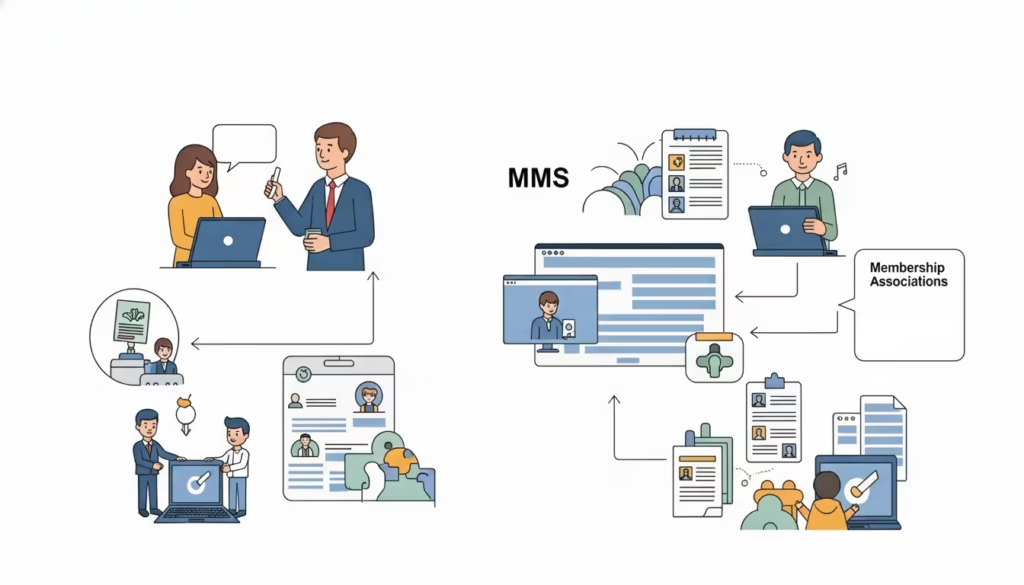
What is a Membership Management System? – Ants Answer Hub

1. What is a membership management system

A membership management system is a web-based platform that helps associations, chambers, institutes, and societies manage member applications, approvals, renewals, payments, directories, communication, and reporting in one place. Instead of juggling Excel sheets, email threads, and manual reminders, the organization works through a structured portal that reduces admin effort and improves visibility.

What is a Membership Management System? – Ants Answer Hub
Why associations need it

Many associations outgrow manual processes when membership numbers rise. New applications pile up, renewal reminders get missed, fee tracking becomes unclear, and reporting to committees takes too much time. A membership portal solves these operational problems while also giving members a cleaner, more professional experience.

Core modules every good system should include

Online application and document submission

Admin review and approval workflow

Tier or category management

Renewal scheduling and reminders

Payment handling and receipt visibility

Member directory controls

Role-based access for admin, finance, and committee users

Reports and exports

Member portal vs admin portal

Member portal

Members should be able to apply, update profile details, upload documents, track application status, pay fees, download receipts or certificates, and view renewal dates.

Admin portal

Admins should be able to review applications, approve or reject requests, manage tiers, handle upgrades, monitor payment status, communicate with members, and export useful reports.

Common workflows associations ask for

New application review before activation

Membership upgrade request from existing members

Annual renewal reminders

Status-based access control for unpaid or pending members

Event registration and participation tracking

Digital membership ID or QR verification

Common workflows associations ask for

New application review before activation

Membership upgrade request from existing members

Annual renewal reminders

Status-based access control for unpaid or pending members

Event registration and participation tracking

Digital membership ID or QR verification

What makes a system successful

The best systems are not overloaded at the start. Associations usually benefit most from an MVP approach: launch the core registration, approval, and renewal functions first, then add upgrades such as event modules, CPD tracking, QR verification, or accounting integrations in later phases.

Recommended internal links

Membership system solution page

Online registration and payment workflow guide

Data privacy or governance page

Case studies from associations or professional bodies

Contact or demo request page

Suggested conversion block

Need a professional membership portal for your association in Sri Lanka? Tell us about your member categories, approval process, payment flow, and renewal rules. We will propose a practical first-phase system that your team can manage with confidence.

FAQs

Can we migrate from Excel?

Yes. Member records can be cleaned, mapped, and imported in a controlled way.

Can we have tiers and upgrade requests?

Yes. Tier rules, approvals, fees, and upgrade workflows can be configured.

Can members pay online?

Yes. A system can support IPG payments, bank transfer proof, or manual verification workflows.

Can we send reminders?

Yes. Renewal, payment, event, and status reminders can be automated.

Who owns the data?

The association owns the data and should have role-based access controls and backup policies.

Read More
Blog
March 18, 2026by Lasitha

eCommerce Website Cost in Sri Lanka (2026) – Ants

1. How much does an eCommerce website cost in Sri Lanka?

An eCommerce website in Sri Lanka costs more than a standard company website because it includes product management, shopping cart logic, order processing, payment options, delivery rules, and operational reporting. The final cost depends on whether you want a simple store to start selling quickly or a more advanced platform that supports long-term growth, stock control, and automation.

How Much Does an eCommerce Website Cost in Sri Lanka? | Ants
The short answer

Many Sri Lankan package pages show that eCommerce builds typically start above ordinary business website pricing because of added checkout, product, and operational features. Once you add payment gateway integration, courier logic, reports, customer accounts, and advanced stock handling, the project moves further into custom territory.

What drives eCommerce cost the most

1. Product count and catalog complexity

A store with 20 simple products is very different from one with 2,000 items, multiple brands, categories, filters, and product variations such as color or size. Catalog structure affects both customer experience and admin work.

2. Checkout and payment setup

Sri Lankan stores often need a practical mix of COD, bank transfer, and IPG support. If the business wants cleaner payment reconciliation and better customer convenience, gateway integration adds real value but also adds development and testing effort.

3. Delivery and courier rules

Delivery is often where eCommerce projects become more complex. Zone-based delivery, weight-based fees, district rules, courier APIs, tracking updates, and failed delivery workflows all affect cost.

4. Stock and order operations

If the store only needs a simple admin panel, the cost stays lower. If you need purchase workflows, branch stock, warehouse logic, slow-moving stock reports, or ERP and POS integration later, the architecture needs more planning from day one.

5. Marketing and conversion features

Wishlist, abandoned cart reminders, coupon logic, bundle offers, customer reviews, remarketing tags, and analytics setup improve sales but add scope. Good eCommerce is not just about displaying products; it is about increasing completed orders.

A simple way to think about budgets

Entry-level store

Suitable for brands that want to validate a product line online. Usually includes a manageable number of products, fixed delivery logic, and a simple checkout setup.

Growth store

Suitable for active retail businesses that want better category structures, improved product pages, discount logic, analytics, and stronger operations. This is often the right level for serious Sri Lankan eCommerce brands.

Custom growth platform

Suitable for larger catalogs, advanced reporting, courier APIs, ERP or POS links, and future marketplace plans. This level should be built with long-term operations in mind, not only launch speed.

Features that are worth paying for early

Fast mobile product pages

Clear checkout with COD and digital payment options

Flexible delivery fee rules

Search and filters that actually help customers find products

Stock-safe order handling

Analytics and conversion tracking

Basic SEO foundations for category and product pages

Common hidden costs

Gateway approval delays and provider charges

Courier or delivery software fees

Product data cleanup and image preparation

SMS, WhatsApp, or email automation tools

Ongoing technical support and upgrades

Content creation for product descriptions and banners

Recommended internal links

Web Design or eCommerce service page

Best payment gateway options in Sri Lanka

Courier integration guide

What reports should eCommerce owners track weekly?

Case studies from retail or product-based clients

Contact or Request a Quotation page

Suggested conversion block

Planning to launch or scale an online store in Sri Lanka? Share your product range, payment needs, delivery model, and expected monthly order volume. We will recommend the right eCommerce scope for your budget and growth stage.

FAQs

Do I need an IPG to start?

Not always. Many stores start with COD and bank transfer options, then add an IPG once approvals are ready.


Can I launch without courier integration?

Yes. Many stores start with manual dispatch and fixed delivery rules, then automate later.

Can I connect POS or ERP later?

Yes. A good architecture should allow phased integration as operations grow.

Can I add marketplace features later?

Yes. Multi-vendor features can be added as a separate phase when your processes are ready.

What are the main recurring costs?

Hosting, support, updates, payment gateway charges, SMS or WhatsApp tools, and any third-party services.

What are the main recurring costs?

Hosting, support, updates, payment gateway charges, SMS or WhatsApp tools, and any third-party services.

Read More
BlogDesignDevelopment
December 30, 2025by Lasitha

WhatsApp CRM in Sri Lanka: GrowYour Business and Increase Sales from Digital Marketing

WhatsApp CRM in Sri Lanka: GrowYour Business and Increase Sales from Digital Marketing

If you’re a travel company, real estate business, or a service-based company in Sri Lanka, digital marketing is one of the fastest ways to grow. You may be running Meta ads, Google ads, TikTok promotions, boosted posts, influencer campaigns, and lead generation landing pages.

Digital marketing can bring a steady flow of inquiries—but inquiries alone don’t build revenue. To grow your business and increase digital marketing sales, you must manage leads properly.

Because when leads come through WhatsApp, calls, social inboxes, and website forms, manual tracking is not enough. Messages get missed, follow-ups get delayed, and potential customers choose a competitor who responds faster.

Why businesses lose digital marketing leads

Many companies think: more marketing = more sales. In reality, marketing creates leads, and sales happens only when your team handles those leads properly.

In Sri Lanka, inquiries typically come in through WhatsApp, Phone calls, Social media, and Web forms. The problem is what happens next. Most teams still rely on personal WhatsApp chats and spreadsheets. When leads increase, this becomes messy fast, resulting in missed leads and fewer sales.

What is a CRM and how it helps you make more sales

A CRM (Customer Relationship Management system) helps you capture, organize, and manage inquiries in a structured way. It allows you to keep leads in one place, assign them to staff, track follow-ups, and measure agent performance.

The “Lead Leakage” problem: where your leads disappear

Lead leakage means you’re getting inquiries, but you’re not converting enough of them. This usually happens because of:

  • Slow response times
  • No clear lead ownership
  • Weak follow-up discipline
  • Scattered conversations in personal inboxes

Why WhatsApp is the key sales channel in Sri Lanka

Sri Lankan customers prefer speed and convenience. After seeing an ad, they want to message on WhatsApp immediately. This makes WhatsApp an excellent channel—but without a CRM, it’s also easy to lose track of these high-intent conversations.

What happens when you run campaigns without a CRM

When you increase your marketing without a CRM, you often face leads left unread, slow replies during busy periods, and ad budget wasted because the conversion rate is low. The best strategy isn’t just generating leads—it’s converting them.

How Ants CRM helps you grow sales end-to-end

Ants CRM is built for Sri Lankan businesses that want to turn leads into sales. Key features include:

  • Multi-Channel Management: Centralize inquiries from WhatsApp, web, and social media.
  • WhatsApp API Integration: Capture and store full lead history systematically.
  • Multi-Agent Support: Assign leads to specific agents with role-based access.
  • Sales Pipeline: Move leads from “New” to “Contacted” to “Won.”
  • Quotation & Invoicing: Generate quotes and convert them to invoices instantly.

Industry use cases: travel, real estate, and service businesses

Travel: Manage tour inquiries and itinerary requests.
Real Estate: Agent assignment by project area and site visit scheduling.
Service: Handling quotation requests and tracking partial payments.

CRM features checklist for digital marketing success

  • Centralized lead capture
  • WhatsApp lead management
  • Agent assignment & roles
  • Follow-up reminders
  • Payment tracking (including partial payments)

How to choose the right CRM in Sri Lanka

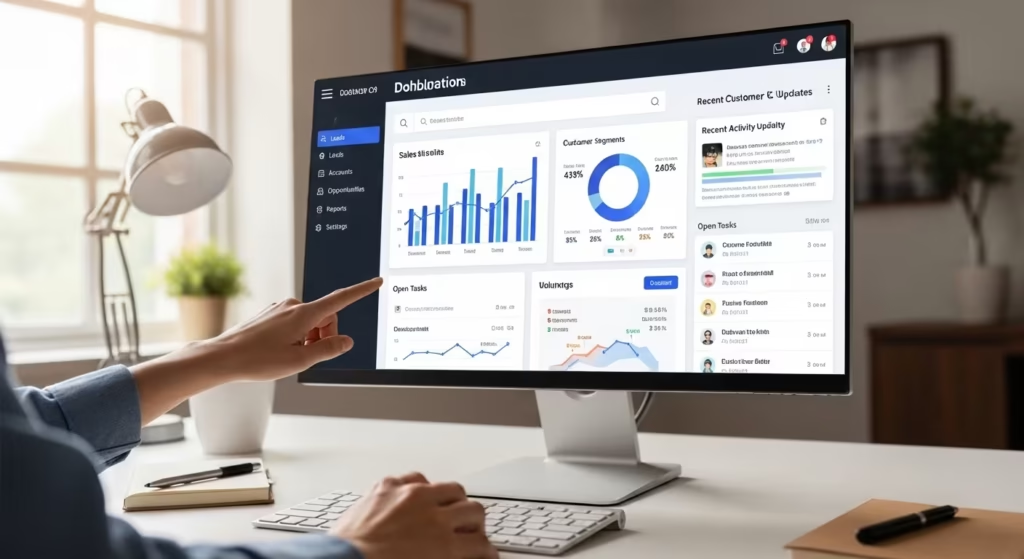
CRM in Sri Lanka dashboard for managing digital marketing leads

Ask: Does it match how Sri Lankans communicate? Can it handle your lead volume? Can you track ROI? A CRM should simplify work—not add complexity.

Final takeaway: grow your business with better lead conversion

Digital marketing creates opportunities. A CRM turns those opportunities into sales. If you want to grow, you need a system like Ants CRM to ensure no lead is lost.

Want a demo? Contact Ants Creation (Pvt) Ltd to see how Ants CRM can help you grow.


Frequently Asked Questions

Why do I need a CRM for digital marketing leads in Sri Lanka?

Because leads come from WhatsApp, calls, social inboxes, and websites. Without a
CRM, follow-ups get delayed and leads get missed, reducing sales conversion.

Can Ants CRM manage WhatsApp inquiries properly?

Yes. Ants CRM supports WhatsApp lead handling, and WhatsApp integration can be
done via an official WhatsApp API provider (client-provided).

Is Ants CRM suitable for travel and tourism businesses?

Yes. It helps manage tour inquiries, itinerary requests, booking confirmations, fol-
low-ups, quotations, and payments.

Is Ants CRM suitable for real estate companies in Sri Lanka?

Yes. It supports agent assignment, pipeline tracking, follow-ups, site visit notes, and
reporting.

Can Ants CRM support multiple sales agents?

Yes. Ants CRM includes multi-agent support with role-based access control and
agent-wise tracking.

Can we create quotations and invoices using Ants CRM?

Yes. You can generate quotations, convert them into invoices, and track payment
status.

Does Ants CRM support partial payments and outstanding balances?

Yes. It supports partial payments, outstanding balance tracking, and payment status
visibility.

Can we track which marketing campaign generates the best sales?

Yes. Ants CRM can track lead sources and conversions, helping you measure ROI
and optimize campaigns.

Read More

Quick Links

Web Development
Digital Marketing
Custom Software Development
Cybersecurity Solutions
Learning Hub
Printing Hub
eCommerce Development

Sri Lanka

No 12, Rest House Rd,

Gampaha. 11000

Canada

6 – 6255 Rue Charpentier,

Brossard, Quebec. J4Z 0L8

+1 (514) 895-3631

Say Hello,

+94 77 282 0498

hello@ants.lk

In Social,

Linkedin-inFacebook-fInstagramYoutube

Quality Policy

Copyright © 2025 – Ants Creation (Pvt) Ltd

ants

back to top