What is an ERP System? – Ants Answer Hub
1. What is an ERP system?
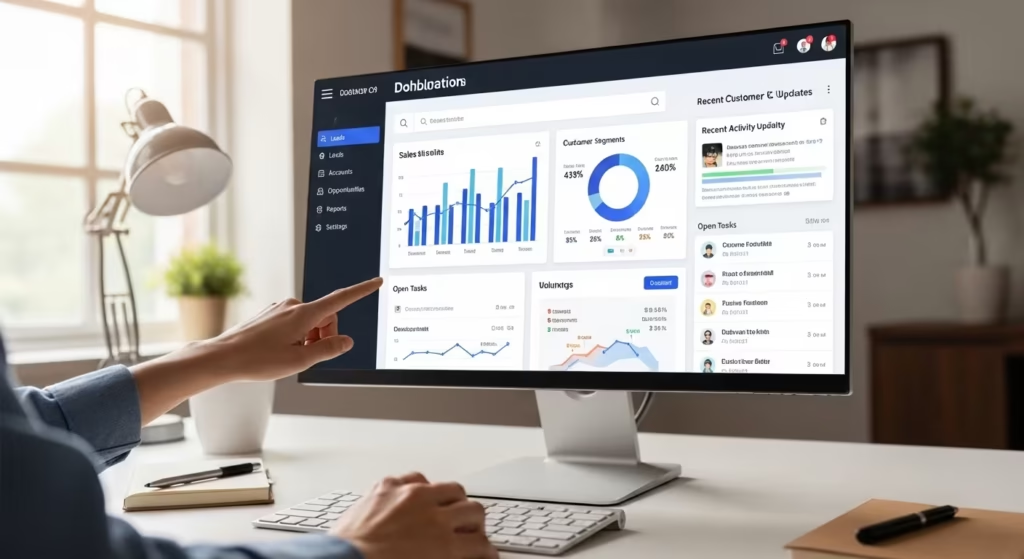
An ERP, or enterprise resource planning system, is a business platform that connects core operations such as purchasing, stock, sales, production, internal approvals, and reporting into one controlled system. Instead of relying on disconnected spreadsheets, emails, and manual registers, the business gains one structured workflow with better visibility and fewer errors.
What ERP solves
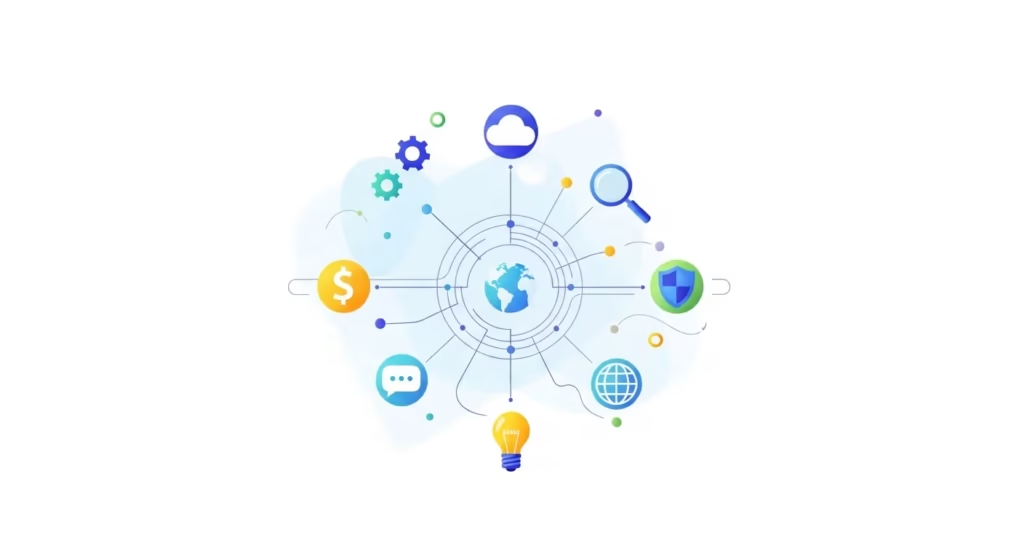
Businesses usually look for ERP when stock records are unreliable, approvals are slow, reports are difficult to prepare, or departments work in isolation. ERP reduces these problems by creating a shared source of truth for transactions and operational data.
Common ERP modules
Inventory and stock movement
Purchasing and supplier records
GRN and item receiving
Sales orders and invoicing support
Production or job management
Role-based approvals
Dashboards and management reports
Audit visibility and data control
ERP vs accounting software
Accounting software focuses mainly on finance records and compliance. ERP covers operational workflows before finance, such as stock, purchasing, internal issue notes, branch movements, production, and business dashboards. In many companies, ERP and accounting systems either connect or operate alongside each other.
Why phased implementation works best
ERP projects are most successful when they start with a practical MVP. For many businesses, that means inventory, purchasing, GRN, and core reporting first. Once teams become comfortable with the process, sales, production, QA, and finance-related extensions can be added in later phases.
What makes an ERP valuable
Real-time stock visibility
Reduced manual errors
Better accountability through user roles
Faster reporting for management
Cleaner operational history for audits and reviews
A stronger base for future automation
Recommended internal links
ERP solution page
CRM solution page
Inventory or production-focused solution pages
Industry case studies
Contact or requirement discussion page
Suggested conversion block
Planning an ERP for your Sri Lankan business? Share the main pain points in stock, purchasing, sales, production, or reporting. We will help you define an ERP MVP that solves the biggest operational problems first and leaves room for future growth.
FAQs
Can we start with only inventory and purchasing?
Yes. Many successful ERP projects begin with a limited first phase and expand later.
Can ERP support manufacturing?
Yes. ERP can support production jobs, bills of materials, wastage, and quality checkpoints.
Can we track slow movers and stock aging?
Yes. These reports are common reasons businesses invest in ERP.
Do you provide user roles and audit logs?
Yes. Role control and activity visibility are key ERP requirements.
How should staff training be handled?
Training should be role-based and phased so teams adopt the system with less disruption.